Source Automatic Washdown Bench and Floor Scales for Food, Pharma, and Logistics
Compare 30 automatic washdown bench and floor scales featuring IP69K protection, LED/LCD displays, and RS232 interfaces. These stainless steel platforms support weighing, counting, and price calculation for demanding industrial environments; compare the available evidence and request quotations based on your requirements.
Key considerations
Products List


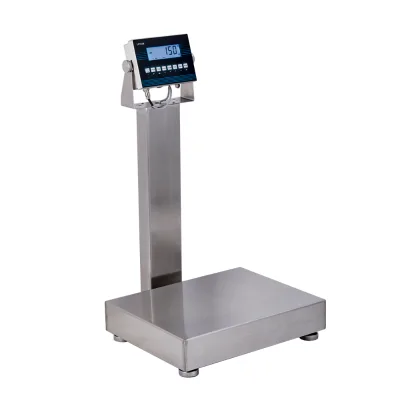


Comprehensive Sourcing Guide
Automatic Washdown Bench and Floor Scales Sourcing Guide
Procurement of automatic washdown bench and floor scales requires careful selection of units capable of withstanding high-pressure cleaning while maintaining precise measurement integrity. The observed market data indicates a diverse range of capacities, from 30kg to 1000kg, with specific models featuring stainless steel construction and IP69K protection ratings. Buyers must prioritize devices that combine electronic platform structures with automatic measurement methods to ensure operational efficiency in demanding environments.
When evaluating listings, it is critical to distinguish between general industrial scales and those specifically engineered for washdown applications. The available data highlights products with SA2.5 anticorrosion treatments and specialized temperature ranges extending from -30℃ to +60℃, which are essential for facilities subject to extreme thermal shocks during cleaning cycles. Sourcing decisions should focus on verifying that the display type, whether LED or LCD, remains readable and functional under wet conditions and direct water exposure.
Product Scope and Observed Listing Signals
The current market offers a wide spectrum of weighing solutions, including models with maximum weighing capacities between 100kg and 500kg, alongside units capable of handling up to 1000kg. Buyers should note the variation in platform dimensions, with some units featuring 2x2 meter platforms and others offering 400mm x 500mm surfaces. These physical differences directly impact the suitability of the scale for specific bench or floor applications, requiring a precise match between the platform size and the intended load dimensions.
Listing signals also reveal significant diversity in functional capabilities, ranging from simple weight measurement to complex operations involving counting, sorting, and price calculation. The presence of specialized features such as hysteresis values of ≤0.02%Fs and stabilization times under two seconds indicates high-performance units designed for rapid, repetitive weighing tasks. Procurement teams must verify that the observed graduation values, which can range from 5g to 200g or even 1kg, align with the regulatory and operational accuracy requirements of their specific industry.
Technical Specifications to Verify
Technical verification must begin with the accuracy class, as the observed data frequently cites OIML III and III accuracy grades, which are standard for commercial and industrial weighing. Buyers should confirm that the division value and using accuracy, such as 0.5kg or specific gram-level divisions, meet the legal-for-trade requirements of their jurisdiction. It is equally important to validate the maximum safe payload, which is often rated at 150% of full scale, ensuring the device can handle occasional overloads without permanent damage.
Environmental resilience is another critical technical parameter, particularly for washdown environments where water and chemical exposure are constant. The IP69K protection rating observed in several listings signifies a high level of resistance to high-pressure, high-temperature water jets, a non-negotiable feature for food and pharmaceutical processing. Additionally, the power supply requirements, typically AC 110-240V, and communication interfaces like RS232 or RS485 must be compatible with existing facility infrastructure to ensure seamless integration and data transfer.
Compliance and Safety Documentation
Compliance documentation is essential for validating the safety and legal standing of the weighing equipment, with CE certification appearing as a common standard in the observed listings. Buyers must request and review these certificates to ensure the product meets the electrical safety and electromagnetic compatibility directives required for operation in various global markets. The presence of SCS standards or customized standard declarations further indicates the manufacturer's adherence to specific industry protocols, which should be cross-referenced with local regulatory bodies.
Safety documentation also extends to the structural integrity and load limits of the scale, requiring clear evidence of the safe load limit and safety load measurement capabilities. The observed data suggests a safe load limit of 125%Fs and a safety load measurement at 100%Fs, which are critical metrics for preventing catastrophic failure during operation. Procurement teams should ensure that all safety certifications are current and that the manufacturer provides detailed manuals outlining the safe operating procedures and maintenance schedules to mitigate liability risks.
Cost Drivers and Commercial Terms
Cost drivers for automatic washdown scales are heavily influenced by the complexity of the electronic components, the quality of the stainless steel construction, and the level of customization required. Units featuring advanced features like counting, sorting, and specialized communication interfaces often command higher prices, while basic weighing models remain more affordable. The observed price range of 1.18 to 3000 USD reflects this spectrum, with the final cost depending on the specific combination of capacity, accuracy, and protective features selected.
Commercial terms such as MOQ and lead times are equally critical factors in the procurement decision-making process. The market data indicates a flexible MOQ starting from 1 set, which is advantageous for small-scale operations or pilot projects, while lead times are generally within 15 days for standard configurations. Buyers should negotiate packaging options, noting the availability of both wooden box and carton box solutions, to ensure the equipment arrives without damage and to optimize shipping costs based on the volume of the order.
Supplier Qualification and Quality Control
Supplier qualification should focus on verifying the origin and manufacturing capabilities, with Qingdao, Shandong, China, identified as a primary production hub for these specialized scales. Buyers must assess the supplier's ability to provide OEM support and customized solutions, as the observed listings highlight options for customized colors, packing, and standard definitions. A robust quality control process is essential, requiring the supplier to demonstrate consistent adherence to the observed accuracy grades and protection ratings across all production batches.
Quality control verification should also include an audit of the supplier's testing procedures for hysteresis, temperature stability, and waterproofing capabilities. The observed specifications, such as a temperature range of -30℃ to +60℃ and a value stable time of 0.5s, serve as benchmarks for the supplier's internal quality standards. Procurement teams should request sample test reports or third-party validation to confirm that the delivered units consistently meet these rigorous performance criteria before committing to large-scale orders.
Long-Term Procurement Checks
Long-term procurement success depends on establishing a reliable supply chain that can support ongoing maintenance, calibration, and potential upgrades. Buyers should verify the availability of spare parts and the supplier's capacity to provide technical support for troubleshooting issues related to the electronic platform or communication interfaces. The observed customization options, including special definition codes and specific graduation values, suggest that the supplier should be capable of adapting future orders to evolving operational needs.
Regular performance checks are necessary to ensure the scales continue to operate within the specified accuracy and safety limits over time. Buyers should implement a schedule for recalibration based on the observed accuracy class and usage frequency, ensuring that the division value and using accuracy remain within acceptable tolerances. Additionally, monitoring the condition of the anticorrosion treatment and the integrity of the IP69K sealing will help prevent premature failure and extend the operational lifespan of the equipment in harsh washdown environments.
FAQs
What is the maximum weighing capacity for these automatic washdown bench and floor scales?
The maximum weighing capacity ranges from 30 to 1000 kg, with specific models supporting 300-500 kg or 100-300 kg loads. This wide range allows selection based on your specific industrial throughput requirements. The platform thickness is 6mm, ensuring durability under heavy loads while maintaining structural integrity for continuous operation in demanding environments.
Can these scales be customized for specific industrial applications?
Yes, customization is available, including OEM support and customized standard options. Buyers can select from various platform sizes, such as 2x2 meters or 400mmx500mm pans, and choose from multiple display types like LED or LCD with backlight. This flexibility ensures the equipment integrates seamlessly into existing workflows and meets unique operational specifications.
What certifications and standards do these automatic washdown scales meet?
These scales typically hold CE certification and comply with OIML III accuracy standards. They also adhere to SCS standards and feature SA2.5 anticorrosion treatment. This combination ensures regulatory compliance for international trade and guarantees high precision and durability, making them suitable for strict hygiene and quality control environments in food processing and chemical industries.
How fast do these scales stabilize and provide accurate readings?
The stabilization time is less than two seconds, with a value stable time of 0.5 seconds. This rapid response ensures efficient workflow in high-volume settings. The division value ranges from 1kg to 200g depending on the model, allowing for precise measurements. This speed and accuracy are critical for maintaining productivity in automated weighing and counting processes.
What is the delivery time and minimum order quantity for these scales?
The delivery time is within 15 days, and the minimum order quantity is one set. This low MOQ allows for easy testing and integration. The scales are packed in wooden boxes or carton boxes for safe transport. This quick turnaround and flexible ordering support rapid deployment for businesses needing immediate upgrades to their weighing infrastructure.
What interfaces are available for connecting these scales to other systems?
These scales feature RS232 and optional RS485 communication interfaces. This connectivity allows seamless integration with computers, printers, or PLCs for data logging and automation. The AC 110-240V power supply ensures compatibility with various electrical standards. These features support efficient data management and process control in automated industrial environments.